In today’s digital landscape, programmatic advertising has transformed how ads are bought and sold. What once required human negotiation between advertisers and publishers now happens automatically, within milliseconds, across vast digital networks. This rapid adoption of programmatic advertising has also made it an intricate system to grasp. In this guide, I endeavoured to break down the fundamentals of programmatic advertising, explain key components and offer practical examples making it easy to follow, whether you’re a beginner or a professional looking for a refresher.
What Is Programmatic Advertising?
At its core, programmatic advertising refers to the automated buying and selling of digital ad inventory using algorithms and data. Unlike traditional advertising, which requires manual negotiations between buyers (advertisers) and sellers (publishers), programmatic advertising uses real-time technology to deliver targeted ads across websites, apps, video platforms and even connected TV (CTV).
Simply put:
Programmatic Advertising = Automated Ad Buying + Data-Driven Decisions
Imagine you run an online shoe store and want to display your ads to people interested in sports shoes. With programmatic advertising, instead of manually selecting websites to place your ad, the system automatically finds the best audience across various platforms—whether on a sports blog or within an app about running.
How Programmatic Advertising Works: The Ecosystem
Understanding the programmatic ecosystem requires familiarity with the roles of several major players and technologies. Let’s break it down step-by-step.
1. Advertisers
These are businesses or brands that want to promote their products or services through digital ads. Advertisers set campaign goals, budgets, and target audiences. A clothing brand may want to target fashion-conscious consumers aged 18-35.
2. Publishers
Publishers are website owners, app developers or content creators who offer ad space (inventory). They want to sell their inventory to earn revenue. News websites like The PUNCH, Vanguard, Pulseng, Legit etc sell banner ad spaces on the pages of their websites to advertisers.
3. Ad Exchange
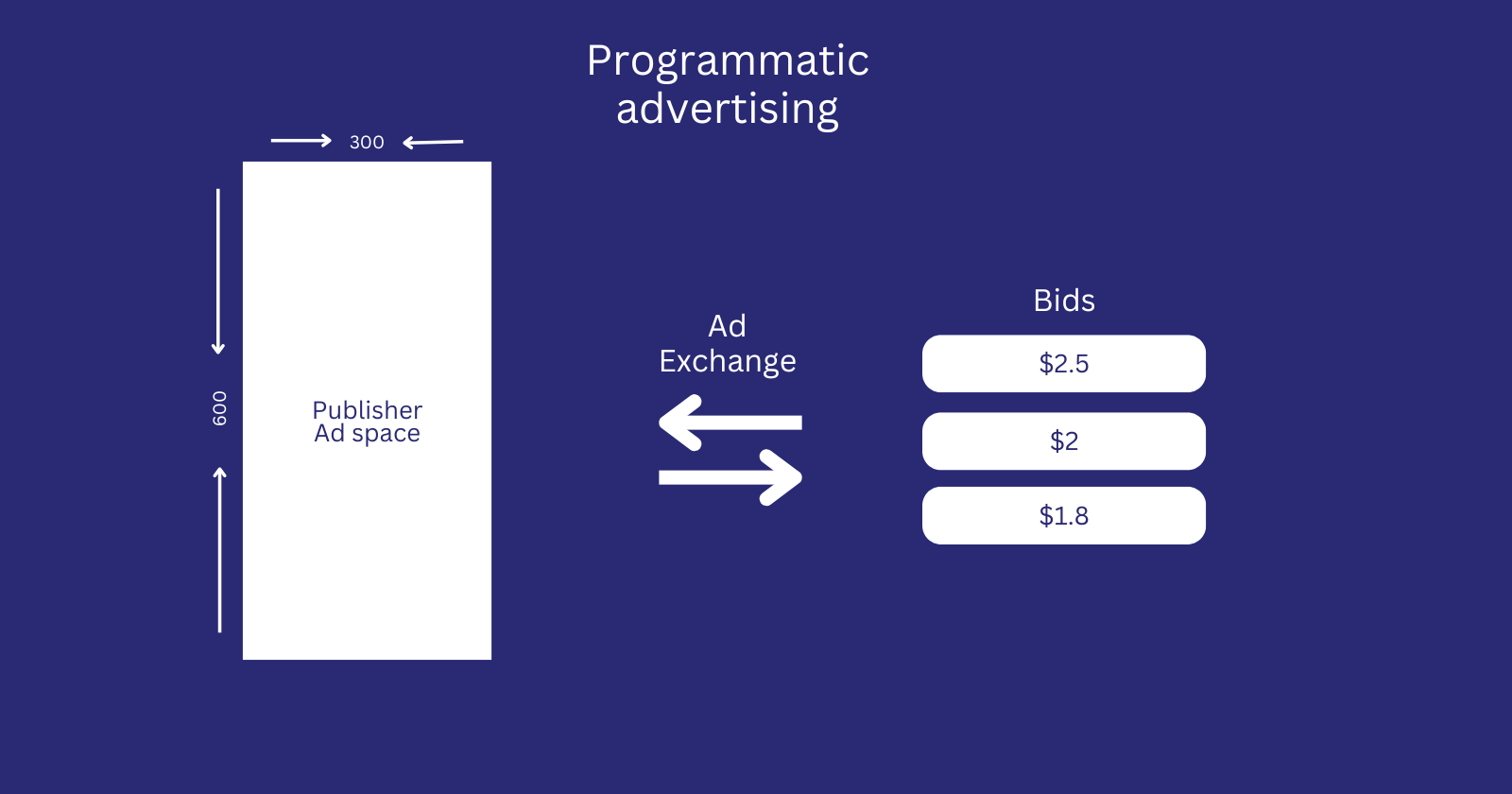
An ad exchange is like a marketplace where ad impressions are bought and sold in real-time auctions. Advertisers bid on ad inventory and the highest bidder wins. This is called Real-Time Bidding (RTB) – the process where the buying and selling of ads happens in milliseconds, right as a webpage loads.
4. Demand-Side Platform (DSP)
A DSP allows advertisers to buy ad space programmatically. Advertisers upload their creative (ad banners, gif, HTML or JavaScript tag), set targeting options (like audience interests) and specify budgets in the DSP. An advertiser might use a DSP like Google DV360 (one of the top players in the market) to target users who searched for “winter jackets” within the past 30 days.
5. Supply-Side Platform (SSP)
An SSP helps publishers manage and sell their ad inventory programmatically. This technology ensures that ad spaces are filled with the highest-paying ads from various sources. A news website might use Google Ad Manager (an SSP) to manage banner ads and maximize ad revenue. Other SSPs include Pubmatic, OpenX, Facebook Audience Network etc.
6. Data Management Platform (DMP)
A DMP collects and organizes audience data to help advertisers make better targeting decisions. Most SSPs like Google Ad Manager collect useful data. So, publishers without the technical know-how may rely on this data on those collected by their analytics tools. Example of Data: User behaviour (like clicks and searches), demographics, and browsing history.
Practical Use: An advertiser targeting luxury car buyers may rely on data from a DMP to identify high-net-worth individuals browsing automotive websites.
7. Creative Management Platform (CMP)
A CMP is used to create and manage ad creatives efficiently. It allows advertisers to design dynamic ads that adjust based on the viewer’s location, time of day, or browsing behaviour.
Having walked you through the players or technologies within the programmatic ecosystem, it is now time to discuss the model that operates.
Programmatic Advertising Models
There are different ways that programmatic advertising operates. Understanding these models is important to determine how to participate meaningfully or just to understand where you stand.
1. Open Auction: This is also known as real-time bidding (RTB). An open auction allows multiple advertisers to bid on the same ad impression in real-time. By default, SSPs or publishers who use them to operate the open option model. However, you can enable or set up other operational models.
- Use Case: Useful for campaigns focused on reach and impressions.
Example: A travel agency might use an open auction to promote flight discounts, bidding on ad space across a range of websites which is why you will see such an ad on a news webpage about Nollywood.
2. Private Marketplace (PMP): In a PMP, the publisher offers its inventory to select advertisers through an invite-only auction. Ideal for advertisers looking to maintain control over the quality of placements. Example: A luxury fashion brand may prefer advertising only on high-end magazines. Hence, a publisher can invite such advertisers to campaign on its inventory through a PMP.
3. Programmatic Guaranteed: This model involves direct agreements between advertisers and publishers for guaranteed ad placements. However, the transactions are still automated through programmatic platforms. Suitable for brand campaigns where the advertiser wants guaranteed visibility. Example: A brand with a new product release may secure a guaranteed deal with a publisher for a specified period.
Benefits of Programmatic Advertising
- Efficiency: Programmatic eliminates manual negotiations and reduces the time required to launch campaigns. Advertisers can set up campaigns within minutes and reach millions of users through a single platform.
- Advanced Targeting: Target users based on demographics, interests, location, device type and even online behaviour. An ad campaign for yoga mats can target users who frequently visit fitness-related websites.
- Real-Time Optimization: Campaign performance can be monitored and optimized in real-time. Advertisers can pause underperforming ads and boost top performers. A marketer may increase bids for ads showing better conversion rates during weekends.
- Cost-Effective: Advertisers only pay for impressions that reach their target audience. Example: A shoe retailer may only bid higher on users with a known interest in footwear, reducing wasted ad spend.
- Transparency and Control: Advertisers have visibility into where their ads are being displayed and can exclude undesirable websites. The same for publisher conscious about protecting their brands from ads that conflict with their brand or stature.
Challenges of Programmatic Advertising
- Ad Fraud and Brand Safety: Automated ad buying can expose advertisers to fraudulent clicks or unwanted placements on low-quality sites. This has been a major negative component for programmatic. However, advertisers use brand safety tools and publishers use SSPs that offer fraud detection features.
- Complexity: The programmatic ecosystem involves many moving parts, which can be overwhelming for beginners. Work with experienced ad ops professionals to manage campaigns effectively.
- Data Privacy Regulations: Regulations like GDPR and CCPA have impacted how advertisers collect and use audience data. Advertisers and publishers must rely on first-party data and ensure compliance with data privacy laws.
Future Trends in Programmatic Advertising
- Connected TV (CTV) and Programmatic Video
- With the rise of streaming platforms, more advertisers are shifting budgets toward CTV ads.
- AI and Machine Learning
- AI-driven algorithms are helping advertisers optimize campaigns with minimal human intervention.
- Cookieless Advertising Solutions
- As third-party cookies are phased out, advertisers are turning to contextual targeting and first-party data strategies.
Practical Example: A Programmatic Campaign in Action
Let’s walk through an example of a programmatic campaign to solidify our understanding.
A popular fitness blog that attracts 500,000 monthly visitors wants to monetize its website through programmatic advertising. The goal is to fill ad spaces with high-quality, relevant ads to generate revenue without compromising the user experience. Here’s how it works:
Step 1: Ad Inventory Setup
The fitness blog creates several ad placements (inventory) on its website, such as:
- A 728×90 leaderboard banner at the top of the homepage.
- A 300×250 sidebar ad on article pages.
- Video ad placements embedded in workout tutorials.The blog uses Google Ad Manager (an SSP) to connect its inventory to various demand sources (like DSPs, ad exchanges, open auctions and private marketplaces).
Step 2: Header Bidding Integration (optional)
- The blog implements header bidding to ensure it receives bids from multiple advertisers simultaneously.
Now, when a visitor opens an article, the header bidding wrapper and/or SSP sends out bid requests to several DSPs in real time, ensuring the highest bidder wins the impression.
Step 3: Real-Time Auction in Action
- A sportswear brand (advertiser) participating in the auction wants to promote its new running shoes.
- The advertiser’s DSP analyzes the incoming bid request, recognizing the visitor as a 30-year-old fitness enthusiast (based on first-party and third-party data).
- The sportswear brand bids $5 CPM (Cost Per Mille) for the ad impression.
- Meanwhile, a protein supplement brand bids $4 CPM for the same impression.
Result: The sportswear brand wins the auction because of the higher bid and its banner ad is displayed instantly on the article page.
Step 4: Ad Delivery and Performance Monitoring
- The fitness blog’s SSP ensures the ad loads quickly and is properly rendered on the page to maintain a smooth user experience.
- The viewability score of the ad is tracked to monitor how long it stays visible on the user’s screen. This data helps publishers optimize ad placements for future campaigns.
Step 5: Revenue Reporting and Optimization
- For every 1,000 impressions, the blog earns $5 from the sportswear brand’s campaign. If the campaign performs well and achieves high engagement, the advertiser may increase bids for future impressions on the site.
- The publisher uses analytics tools within the SSP to review campaign performance—checking metrics such as click-through rates (CTR) and ad viewability.
- If certain ad placements underperform, the publisher adjusts the layout or sets floor prices to ensure that only high-quality ads appear.
Step 6: Ensuring Brand Safety and Ad Quality
- To maintain its reputation, the fitness blog leverages ad quality tools to block unwanted or low-quality ads, such as intrusive pop-ups or irrelevant ads.
- It also uses PMP deals (Private Marketplace) with select advertisers to fill premium ad placements with ads from trusted brands.
Outcome
By participating in the programmatic ecosystem, the fitness blog:
- Maximizes revenue by auctioning its inventory to the highest bidders.
- Maintains user experience by delivering relevant, non-intrusive ads.
- Gains insights into which ad formats and placements perform best, allowing for ongoing optimization.
Example Revenue Calculation:
- 200,000 impressions are sold at an average CPM of $5, earning the publisher $1,000 in revenue.
- Additional video ad placements generate $10 CPM, contributing to more substantial returns.
Conclusion
Programmatic advertising is a game-changer for the digital ad industry, offering unprecedented efficiency, targeting precision and cost-effectiveness. However, it can be complex for beginners due to the number of moving parts in the ecosystem. By understanding the roles of DSPs, SSPs, ad exchanges and other components, advertisers and publishers can unlock the full potential of programmatic campaigns. Whether you’re a beginner or an experienced marketer, keeping up with the latest trends—such as AI, connected TV and privacy regulations—will be essential in staying ahead in this fast-evolving space.