Author: Balogun Olanrewaju

  • The Revenue Blueprint: Identifying Top-Performing Ad Formats in 2026

    The Revenue Blueprint: Identifying Top-Performing Ad Formats in 2026

    In the world of digital publishing, not all ad impressions are created equal. You could have two websites with identical traffic, yet one might earn double the revenue simply because of how they’ve structured their “inventory.”

    As we move through the second half of 2026, the digital advertising landscape has shifted. We are no longer in an era where you can just “slap a banner on it” and hope for the best. Advertisers are now hyper-focused on viewability, engagement, and—most importantly—how an ad affects the user’s journey.

    If you want to maximize your site’s earning potential, you need to understand which formats are currently dominating the market and, crucially, why they command higher premiums. Here is a deep dive into the top-performing inventory formats for today’s publishers.

    1. The Medium Rectangle (300×250)

    If there is one “king” of display advertising, it is the 300×250 medium rectangle. Despite being one of the oldest sizes in the book, it remains the most sought-after inventory by advertisers globally.

    Why it performs:

    • Versatility: It is small enough to fit in a sidebar but large enough to sit comfortably within the flow of an article.

    • Competition: Because almost every advertiser has a 300×250 creative ready to go, the auction pressure for this slot is immense. High competition leads to higher CPMs.

    • Viewability: When placed “above the fold” or embedded within high-engagement text, it consistently scores high viewability marks, which is a key metric for premium programmatic buyers.


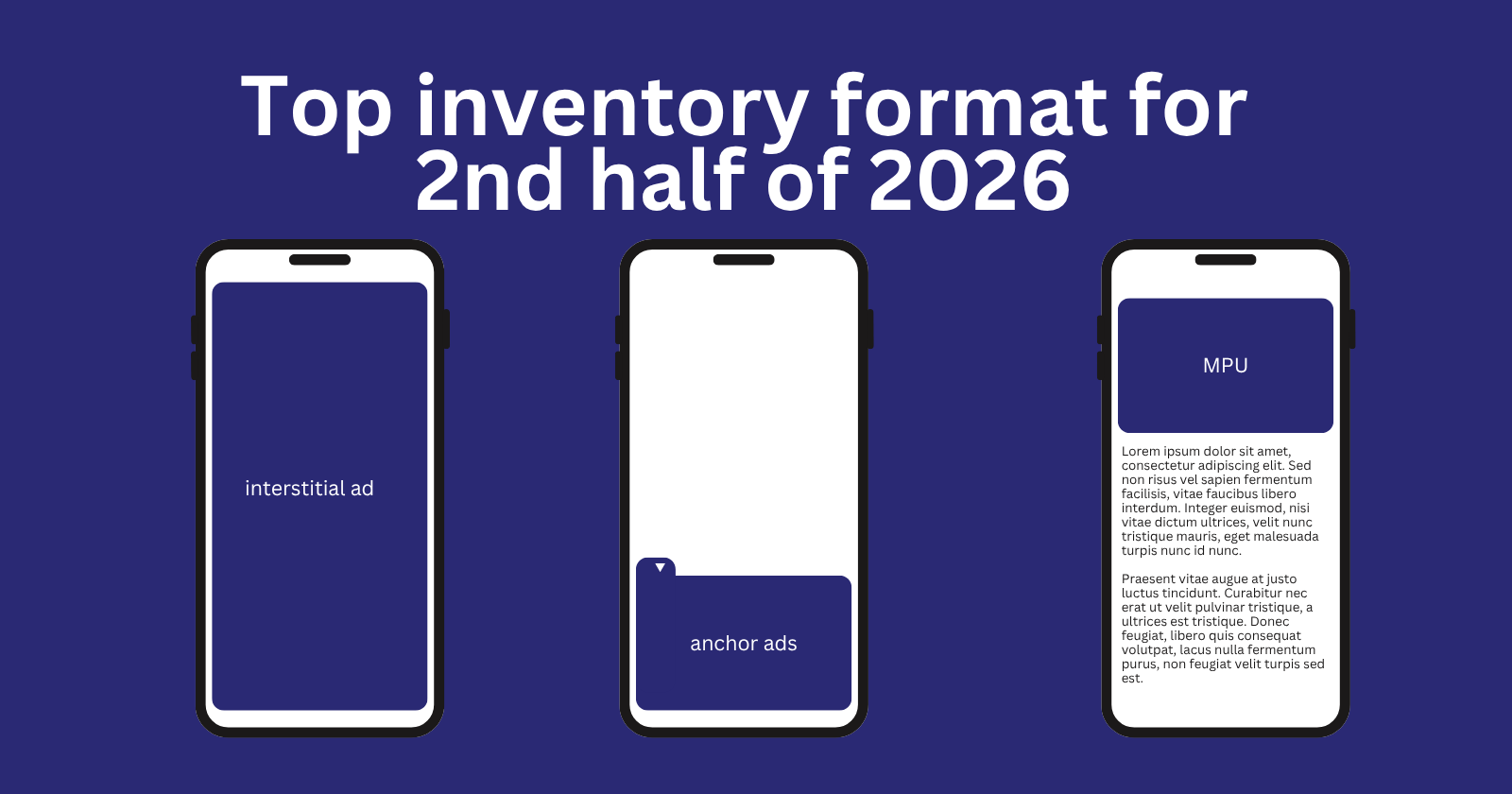
    Medium rectangle ad format encircle for recognition on a web page
    MPU Ad inventory format


    2. The Revenue Accelerator: Interstitial Ads

    If you’re looking for a format that moves the needle on revenue quickly, Interstitials (full-screen ads) are unparalleled. In 2026, mobile interstitials have become a gold standard for publishers looking to monetize natural transitions in user behavior.

    Why they perform:

    • Total Attention: Unlike a banner that occupies 10% of the screen, an interstitial occupies 100%. This eliminates “banner blindness” entirely.

    • Higher CPMs: Data from Yango Ads indicates that interstitials can command CPMs roughly 71% higher than standard banner placements. While a banner might fetch $2.50, an interstitial can easily push toward the $4.50–$4.80 range.

    • Strategic Timing: By appearing at “natural breaks”—such as when a user finishes an article or moves to a new page—they respect the user flow more than intrusive pop-ups, leading to higher engagement without the same level of frustration.


    A hand holding a mobile phone with interstitial ad format in full view
    Interstitial ads format | Credit Verve blog


    3. The Mobile Specialist: The 320×100 Large Mobile Leaderboard/Sticky

    On mobile, real estate is expensive. While the 300×50 “leaderboard” used to be the standard, the 320×100 (Large Mobile Banner) has taken its place as the top-performing mobile format.

    Why it performs:

    • Twice the Space: It offers double the vertical height of a standard mobile leaderboard banner, allowing for much more compelling call-to-action (CTA) buttons and imagery.

    • Better Viewability: It’s large enough to be noticed but small enough to remain “anchored” to the bottom of a screen (sticky ads) without ruining the mobile browsing experience.

    • High Fill Rates: Like the 300×250 on desktop, the 320×100 is a “universal” size that nearly all mobile demand sources prioritize.

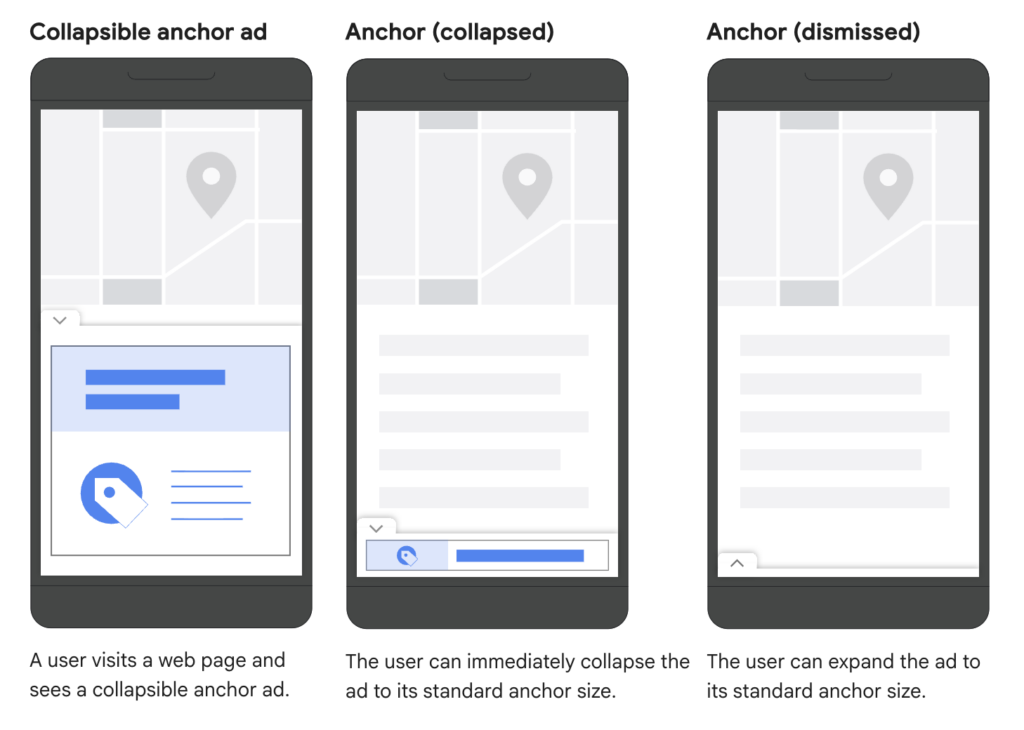
    PRO TIP: If you use Google Ad Manager, the industry standard for web ads management, you can make this particular format collapsible. Hence, it will initially appear like an MPU from the bottom of the screen but will be collapsible to a 320×100 size. See image below:

    collapsible anchor ads format illustrated
    collapsible anchor ads format illustrated | Credit Google blog post


    4. The Growth Leader: Native Advertising

    Native ads are designed to “blend in” with the editorial look and feel of your website. Whether it’s a “Recommended for You” widget at the bottom of a post or a sponsored article in your feed, native is projected to hit $116 billion in spend by the end of 2025 in the U.S. alone.

    Why it performs:

    • Trust Factor: Because native ads don’t look like traditional ads, users are significantly more likely to engage with them. Studies show that consumers trust brands that utilize user-generated content (UGC) or native-style ads up to 84% more than studio-produced banners.ssss

    • Higher CTR: Native placements typically achieve click-through rates that are 4x to 5x higher than traditional display ads.

    • Ad-Blocker Resilience: Because they are integrated into the content flow, native ads are often more difficult for traditional ad-blockers to identify and strip away compared to standard “AdX” tags.

    Photo credit: Enterpreneur


    The “Why” Behind the Success: User Experience (UX)

    The common thread among all top-performing formats in 2026 is relevance and respect. Advertisers are moving away from formats that “trick” users into clicking. Instead, they are paying a premium for formats that provide a Clear Value Proposition within 2–3 seconds. Whether it’s an interstitial that respects a natural break or a native ad that provides genuine value, the ads that perform best are the ones that treat the user like a human, not just an “impression.”

    If you are still relying on a single 728×90 banner at the top of your site, you are likely leaving thousands of dollars on the table. By diversifying into high-impact formats like video and interstitials, you don’t just increase your revenue—you future-proof your business in an increasingly competitive digital world.

  • AdSense to Ad Manager: When to Switch

    AdSense to Ad Manager: When to Switch

    If your website is currently generating $2,000/month on AdSense, you’re likely feeling pretty good about your monetization. But here is the reality: a successful move to Google Ad Manager (GAM) could realistically push that same traffic to $3,000–$3,500/month.

    You aren’t creating more content. You aren’t buying more traffic. You are simply selling your existing ad space more efficiently.

    Moving from Google AdSense to GAM is a strategic shift from being a passive participant in an ad network to running your own professional ad desk. While AdSense is the gold standard for simplicity, GAM provides the granular control needed to maximize the value of every single pageview.

    Here is everything you need to know about making the leap in 2026.

    📈 When to Make the Move: The “Signal” Checklist

    Traffic volume is the most common metric people cite, but it isn’t the only one. You should consider the switch when your business requirements evolve in these four specific ways:

    1. You’ve Started Receiving Direct Deal Inquiries

    When a brand reaches out and says, “We want to buy the header banner on your homepage for the next 30 days at a fixed price,” AdSense cannot help you. You need an ad server to “book” that inventory, set a specific impression goal, and ensure it delivers. GAM allows you to manage these “Guaranteed” deals alongside your programmatic ads.

    2. You Want to Introduce Header Bidding

    In AdSense, you are essentially in a closed loop. By moving to GAM, you can implement Header Bidding—a setup where multiple ad networks (like Rubicon, PubMatic, or Amazon) compete against Google for your ad space simultaneously. According to industry data, opening your inventory to this level of competition can drive CPMs 30–70% higher than AdSense alone.

    3. You Manage a Multi-Platform Ecosystem

    If you have a website, a mobile app, and perhaps a video player, managing three different dashboards is a recipe for inefficiency. GAM acts as a centralized brain for your entire digital footprint, allowing you to organize and report on all platforms from a single login.

    4. You’ve Outgrown “Basic” Reporting

    AdSense tells you how much you earned. GAM tells you why you earned it. You get deep analytics on specific audience segments, device latency, and geographic performance, allowing you to prune low-performing areas of your site and double down on high-value ones.

    🛠 Why This Increases Revenue: The Power of Dynamic Allocation

    The primary engine behind the revenue jump in GAM is a feature called Dynamic Allocation. In the old “Waterfall” model, if a direct advertiser didn’t buy the space, it would pass down to the next network, and then the next. This was slow and inefficient.

    Dynamic Allocation changes the game. It allows AdSense and Ad Exchange (AdX) to compete in real-time against your direct deals and other networks. If a programmatic buyer is willing to pay more than the “opportunity cost” of your direct deal, GAM will serve the higher-paying ad (while still ensuring your direct deal meets its monthly goal).

    The Result: You never leave money on the table. The system automatically picks the highest payer for every single impression on an individual, millisecond-by-millisecond basis.

    🚦 The Threshold: Is Your Site Ready?

    Before you hit the “sign up” button, you must be honest about your resources. Google Ad Manager is a professional-grade tool with a steep learning curve.

    • Traffic Requirement: While there is no “hard” limit for the free version of GAM, the industry consensus is that you should have at least 100,000 to 500,000 monthly pageviews.

    • The Learning Curve: Unlike AdSense’s “set it and forget it” Auto-Ads, GAM requires manual configuration of “Orders,” “Line Items,” and “Key-Values.”

    • Ad Ops: If you don’t have the time to spend 5–10 hours a week monitoring your ad health, the incremental gains may be eaten up by the “cost” of your time.

    🏁 The Winning Strategy

    The best path for most publishers is to stay with AdSense until you feel the friction of its limitations.

    When you find yourself turning down direct sponsors because you don’t know how to “slot” them in, or when you see your traffic plateauing but your revenue staying stagnant, that is your signal to migrate.

    The goal isn’t just to show ads—it’s to run a media business. AdSense is your entry-level internship; Google Ad Manager is your seat at the executive table.

    Feature Google AdSense Google Ad Manager
    Ease of Use High (Plug & Play) Low (Requires Training)
    Demand Sources Google Ads only Google + 3rd Party + Direct
    Competition Limited High (Dynamic Allocation)
    Direct Deals No Yes
    Best For Bloggers & Small Publishers Mid-to-Large Media Companies
    Revenue Potential Baseline Baseline + 20–50% Uplift

    Ready to make the jump? Start by auditing your current direct-deal inquiries. If the money is waiting at the door, it’s time to open it with GAM.

  • Ad Operations 101: The Backbone of Digital Advertising

    Ad Operations 101: The Backbone of Digital Advertising

    I have heard colleagues use the phrases “ad trafficking” and “ad operations” interchangeably. However, ad operation (alias Ad Ops) is a lot more than simply trafficking ads.

    Ad ops ensure the smooth and efficient delivery, monitoring, optimization and reporting of campaigns. Without a well-functioning Ad Ops team, even the most creative and well-funded campaigns could fall flat. With this article, I break down the core concepts, responsibilities, tools and best practices of Ad Operations, providing a practical guide for those new to the field and professionals looking to refresh their knowledge.

    What is Ad Operations?

    Ad Operations refers to the end-to-end management of digital advertising campaigns, encompassing everything from ad trafficking and quality control to performance optimization and reporting. It ensures that ads are delivered correctly, on time and within the parameters set by the advertiser, whether the goal is brand awareness, engagement or conversions.

    In simple terms, Ad Ops teams are responsible for making sure that “the right ad reaches the right audience, at the right time and in the right place.”

    Key Responsibilities of Ad Ops Teams

    • Campaign Setup and Ad Trafficking
    • Monitoring and Optimizing Campaign Performance
    • Ensuring Ad Quality and Brand Safety
    • Troubleshooting and Resolving Delivery Issues
    • Reporting on Campaign Metrics and KPIs

    Ad Ops teams act as a bridge between advertisers, publishers, sales teams or account managers and platforms, ensuring every piece works seamlessly across the ecosystem. What often begins with a pitch deck of an inventory and continues with an Insertion Order and creative design ends in on the desk of the Ad Ops team, the final point in the digital ad production cycle.

    Core Concepts in Ad Operations

    1. Ad Trafficking

    Ad trafficking involves setting up ad creatives in ad servers or programmatic platforms and ensuring they are ready to go live. This includes:

    • Validating an IO or business agreement.
    • Uploading ad creatives (images, videos, HTML5 files).
    • Inputting targeting parameters (demographics, geography, device type).
    • Assigning start and end dates, budget and pacing rules.

    2. Ad Servers

    An ad server is the technology that stores, delivers and tracks digital ads across websites, apps, and other channels. It ensures that the right creative appears for the right audience and records the interactions with the ad (e.g., clicks, impressions and conversion).

    • Publisher Ad Server: is used by publishers among other things to manage and prioritize ad placements. Eg: Google Ad Manager.
    • Advertiser Ad Server: Used by advertisers to serve ads and track campaign performance. Eg: Amazon ads, Google ads etc

    3. Tracking Pixels and Tags

    tracking pixel or tag is a small piece of code embedded within an ad landing page or URL. It helps track user actions, such as impressions, clicks and conversions.

    Example: A conversion pixel may fire when a user clicks on an ad for running shoes and completes a purchase on the advertiser’s website.

    4. Viewability and Ad Verification

    • Viewability: Refers to whether an ad was seen by a user (e.g., at least 50% of a banner was visible for 1 second or more).
    • Ad Verification: Ensures the ad was displayed in a suitable environment, protecting the brand from inappropriate placements.

    ToolsMOATDoubleVerifyIAS help measure viewability and prevent fraud or unsafe placements.

    The Role of Ad Ops in the Digital Advertising Lifecycle

    1. Campaign Setup and Launch

    After the advertiser or agency provides the campaign assets, the Ad Ops team handles the ad trafficking process. This includes:

    • Uploading the creative assets into the ad server.
    • Ensuring the creatives meet specs and standards (correct dimensions, file size limits).
    • Setting targeting criteria and scheduling the campaign for launch.
    • Ensure no impression overbooking or avoid ad delivery bottleneck

    Example: A campaign promoting a new movie may go live one week before the release date, targeting specific age groups on video streaming platforms.

    2. Campaign Monitoring and Optimization

    Once the campaign is live, Ad Ops continuously monitors it to ensure everything runs smoothly and achieves the desired results.

    • Real-Time Monitoring: Ad Ops professionals keep an eye on metrics such as impressions, clicks and click-through rates (CTR).
    • Optimization: If certain creatives or placements underperform, adjustments are made—such as shifting budget to better-performing ads or changing targeting options.

    Example: If a display ad performs better on sports websites than general news sites, the Ad Ops team might shift more of the budget toward sports-related content.

    3. Troubleshooting and Issue Resolution

    Not every campaign runs smoothly. Issues such as creative errors, tracking discrepancies or ads not appearing in the correct placements can occur. Ad Ops teams troubleshoot and resolve these issues quickly to minimize impact.

    Common Issues and Solutions:

    • Discrepancies between ad server and DSP metrics: Cross-check tracking pixels and reporting settings.
    • Ads not showing properly on mobile devices: Update creative dimensions or ensure responsive design compatibility.

    4. Ensuring Ad Quality and Brand Safety

    Ad Ops teams also focus on ad quality and brand safety to maintain trust with advertisers.

    • Ad Quality: They ensure ads load quickly, follow best practices, and do not disrupt user experience.
    • Brand Safety: Ad Ops ensures ads do not appear next to inappropriate or controversial content by using ad verification tools like IAS and DoubleVerify.

    Example: A luxury car brand’s ad appearing next to sensationalist content could damage the brand’s image. Ad Ops teams prevent this by blocking undesirable sites.

    5. Reporting and Post-Campaign Analysis

    Once the campaign ends, the Ad Ops team prepares detailed reports for stakeholders. These reports include:

    • Impressions: How many times the ad was displayed.
    • CTR: The ratio of clicks to impressions.
    • Conversions: Number of actions taken (e.g., purchases, sign-ups).
    • Viewability Rates: How many ads were visible to users.

    Ad Ops teams also conduct post-campaign analyses to identify lessons and improve future campaigns.

    Key Tools and Technologies in Ad Operations

    Ad Ops professionals rely on a variety of tools to streamline workflows and optimize performance:

    1. Ad Servers: Google Ad Manager, Amazon Ads
    2. DSPs and SSPs: DV360, The Trade Desk, PubMatic
    3. Ad Quality Tools: IAS, MOAT, DoubleVerify
    4. Reporting Platforms: Google Analytics, Looker Studio
    5. Collaboration Tools: Jira, Slack

    Best Practices for Ad Ops Success

    1. Documentation and Workflow Management
      • Ensure there is clear documentation for campaign setup processes to avoid mistakes.
      • Establish workflows and ensure every stakeholder understands their role.
    2. Test Campaigns Before Launch
      • Always run test campaigns to ensure creatives, tracking pixels, and reporting tools are functioning correctly.
    3. Use Automated Alerts
      • Set up real-time alerts for discrepancies, budget depletion or underperformance to act quickly. Where this is a technical limitation making this not possible, establish workflows that mandate checks are strategic points in the ad delivery lifecycle
    4. Foster Communication Across Teams
      • Effective communication between Ad Ops, sales, creative teams and the commercial team ensures smooth execution.
    5. Stay Updated on Industry Trends
      • The digital advertising landscape is evolving rapidly. Ad Ops teams must stay updated on trends such as AI-driven optimizationsconnected TV (CTV) ads, and privacy regulations like GDPR and CCPA.

    The Importance of Ad Operations in Programmatic Advertising

    In programmatic advertising, where ads are bought and sold in real-time across various platforms, the role of Ad Ops becomes even more critical. Ad Ops teams ensure:

    • Programmatic platforms are integrated correctly with the ad server.
    • Campaign budgets are optimized in real time.
    • Fraudulent traffic is filtered out to prevent wasted ad spend.

    Without skilled Ad Ops professionals, programmatic campaigns can quickly run into issues such as budget misallocation, poor targeting or exposure to ad fraud.

    Challenges in Ad Operations

    1. Discrepancies in Metrics
      • Different platforms may report different metrics for impressions and clicks, causing confusion.
    2. Increasing Complexity
      • With more platforms (CTV, programmatic, mobile, social), managing campaigns has become more complex.
    3. Ad Fraud and Privacy Regulations
      • Ad Ops teams need to stay vigilant against fraud and ensure compliance with evolving data privacy laws.

    Conclusion

    Whether you’re a beginner entering the world of digital advertising or an experienced professional refreshing your knowledge, mastering Ad Operations is essential. It not only ensures smooth campaign delivery but also plays a pivotal role in maximizing ROI and building trust between advertisers and publishers. In a fast-evolving industry, Ad Ops remains the backbone of digital advertising—keeping everything running efficiently behind the scenes.

  • Why I Think Everyone Should Be Interested in Generative AI

    Why I Think Everyone Should Be Interested in Generative AI

    Generative AI isn’t just for tech enthusiasts anymore. It’s rapidly becoming a part of our everyday lives, influencing everything from the art we see to the products we use. In this blog post and in few short paragraphs, I will break down why generative AI is so important and why everyone, regardless of their technical background, should be paying attention.

    What is Generative AI?

    In simple terms, generative AI is a type of artificial intelligence that can create new content. This content can be anything from text and images to music and even videos. Think of it like a super-creative assistant that can generate ideas and bring them to life. In the words of an AI Whisperer, Henrik Kniberg, generative AI or gen AI is like “having Albert Einstein in your basement”. And you can go to it for idea generation and refinement, to help with your school essay, your speech at a public event, your proposal for a project etc. The list is endless.

    How Does Generative AI Work?

    Generative AI is basically or rudimentarily computer programs or models trained with large amounts of data. With this large amount of data, they are now very capable of identifying patterns and relationships within this data and using this knowledge to generate new, original content. It is like a toddler learning speech by observing his parents and others around. In the initial stages, the child doesn’t really understand what is being said but can associate words with meanings. They can say, “da-da” and can associate it with a specific parent. Next, the child knows what “yummy” represents. Before long, the child can conjecture and they grow from there.

    Gen AI are trained to understand and see patterns through enormous amounts of data. And because they are computers with an incredible amount of computational speed, they learn very fast. And this is why everyone should be interested in it. By being interested in Gen AI and making use of it in your everyday life responsibly, you become enhanced as a person to work faster and more intelligently.

    Why Should You Care?

    You might wonder why you should care about generative AI if you’re not a tech expert. Here are a few reasons:

    1. It’s Changing the World: Generative AI is already being used in a wide range of industries, from healthcare to entertainment. It’s helping to facilitate research into new medicines, design better products, write music, and the list is becoming endless.
    2. It’s Making Our Lives Easier: Generative AI can automate tasks that used to be time-consuming and tedious. AI Agents can automate repetitive tasks. For example, it can generate summaries of long documents, translate languages, write emails, schedule LinkedIn posts, etc.
    3. It’s Opening Up New Possibilities: Generative AI is enabling us to do things that were previously impossible. For example, it can create realistic images of people and places that don’t exist, it can create a product video ad, create movies in half the time and with a fraction of the cost, and it can even generate new ideas for products and services.

    The limit to what AI can do is YOU. By that I mean, the limit is really in your imagination of the use cases you can apply it to. And research kept pushing through those use cases and limits. How can you prompt the AI to achieve your goals? It is even opening up new roles or career paths, such as Prompt Engineering.

    Examples of Generative AI in Action

    1. Art and Design: Generative AI is being used to create stunning works of art and design. Artists and designers are using it to generate new ideas and explore new creative possibilities.
    2. Healthcare: Generative AI is being used to develop new drugs and treatments. Researchers are using it to analyze large datasets of medical information and identify potential new therapies.
    3. Customer Service: Generative AI is being used to create chatbots that can provide customer service 24/7. These chatbots can answer questions, resolve issues, and even provide personalized recommendations.
    4. Agentic capabilities: AI Agents can now be instructed to act in your behave. Use cases have included booking a flight, paying for monthly recurring cost, scheduling a meeting or even attending such meetings etc

    The Future of Generative AI

    The future of generative AI is incredibly exciting. As the technology continues to develop, we can expect to see even more amazing applications. Generative AI has the potential to revolutionise the way we live and work, and it’s something that everyone should be paying attention to.

    Conclusion

    Generative AI is a powerful technology that is changing the world. It’s making our lives easier, opening up new possibilities, and even helping us to be more creative. Whether you’re a tech enthusiast or not, it’s important to understand the potential of generative AI and how it’s going to impact our lives. So, stay curious, stay informed and get ready for the exciting future of generative AI!

  • What Is Programmatic Advertising? A Beginner’s Guide to the Ecosystem

    What Is Programmatic Advertising? A Beginner’s Guide to the Ecosystem

    In today’s digital landscape, programmatic advertising has transformed how ads are bought and sold. What once required human negotiation between advertisers and publishers now happens automatically, within milliseconds, across vast digital networks. This rapid adoption of programmatic advertising has also made it an intricate system to grasp. In this guide, I endeavoured to break down the fundamentals of programmatic advertising, explain key components and offer practical examples making it easy to follow, whether you’re a beginner or a professional looking for a refresher.

    What Is Programmatic Advertising?

    At its core, programmatic advertising refers to the automated buying and selling of digital ad inventory using algorithms and data. Unlike traditional advertising, which requires manual negotiations between buyers (advertisers) and sellers (publishers), programmatic advertising uses real-time technology to deliver targeted ads across websites, apps, video platforms and even connected TV (CTV).

    Simply put:

    Programmatic Advertising = Automated Ad Buying + Data-Driven Decisions


    Imagine you run an online shoe store and want to display your ads to people interested in sports shoes. With programmatic advertising, instead of manually selecting websites to place your ad, the system automatically finds the best audience across various platforms—whether on a sports blog or within an app about running.

    How Programmatic Advertising Works: The Ecosystem

    Understanding the programmatic ecosystem requires familiarity with the roles of several major players and technologies. Let’s break it down step-by-step.

    1. Advertisers

    These are businesses or brands that want to promote their products or services through digital ads. Advertisers set campaign goals, budgets, and target audiences. A clothing brand may want to target fashion-conscious consumers aged 18-35.

    2. Publishers

    Publishers are website owners, app developers or content creators who offer ad space (inventory). They want to sell their inventory to earn revenue. News websites like The PUNCH, Vanguard, Pulseng, Legit etc sell banner ad spaces on the pages of their websites to advertisers.

    3. Ad Exchange

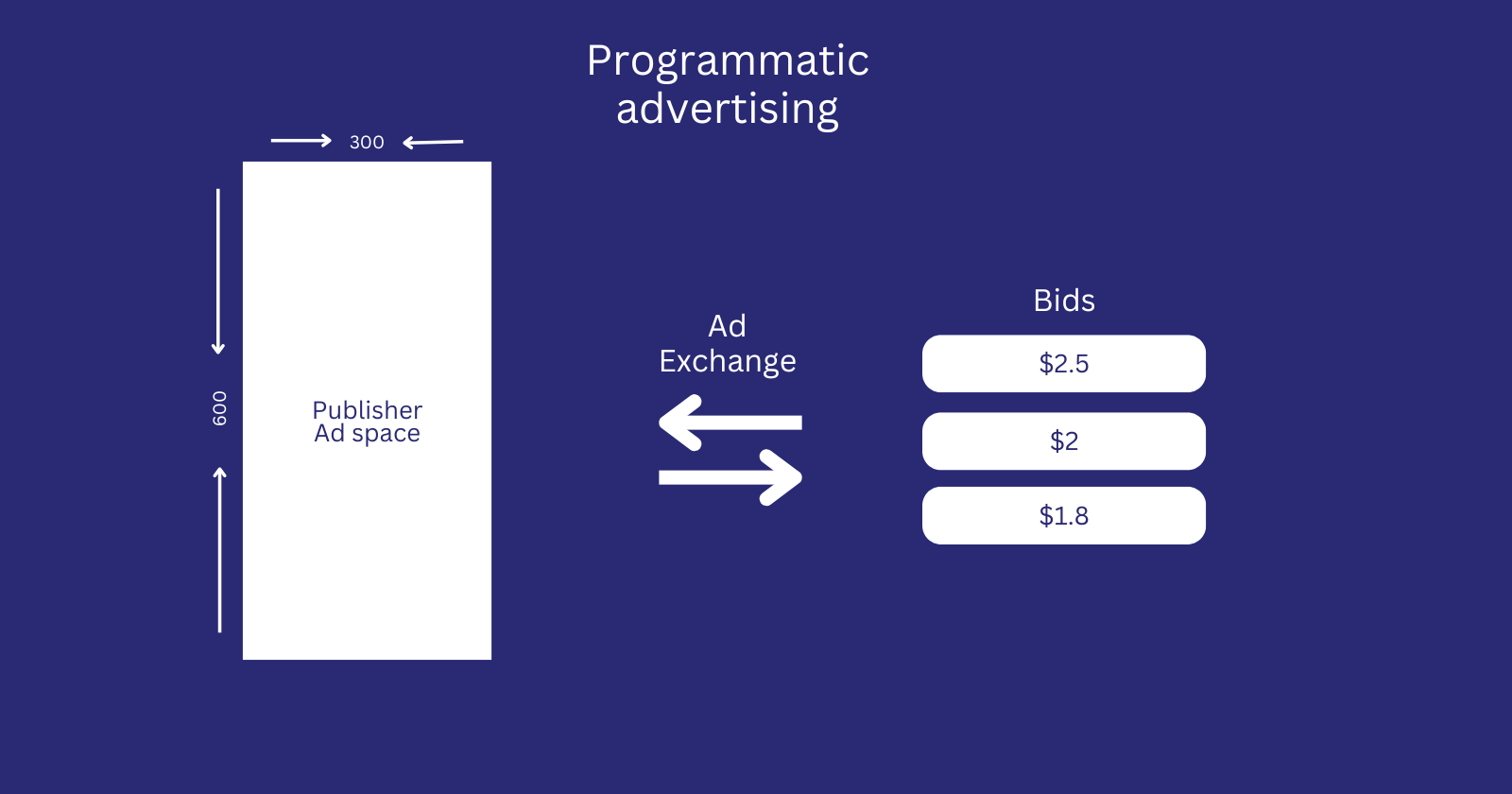
    An ad exchange is like a marketplace where ad impressions are bought and sold in real-time auctions. Advertisers bid on ad inventory and the highest bidder wins. This is called Real-Time Bidding (RTB) – the process where the buying and selling of ads happens in milliseconds, right as a webpage loads.

    4. Demand-Side Platform (DSP)

    DSP allows advertisers to buy ad space programmatically. Advertisers upload their creative (ad banners, gif, HTML or JavaScript tag), set targeting options (like audience interests) and specify budgets in the DSP. An advertiser might use a DSP like Google DV360 (one of the top players in the market) to target users who searched for “winter jackets” within the past 30 days.

    5. Supply-Side Platform (SSP)

    An SSP helps publishers manage and sell their ad inventory programmatically. This technology ensures that ad spaces are filled with the highest-paying ads from various sources. A news website might use Google Ad Manager (an SSP) to manage banner ads and maximize ad revenue. Other SSPs include Pubmatic, OpenX, Facebook Audience Network etc.

    6. Data Management Platform (DMP)

    DMP collects and organizes audience data to help advertisers make better targeting decisions. Most SSPs like Google Ad Manager collect useful data. So, publishers without the technical know-how may rely on this data on those collected by their analytics tools. Example of Data: User behaviour (like clicks and searches), demographics, and browsing history.

    Practical Use: An advertiser targeting luxury car buyers may rely on data from a DMP to identify high-net-worth individuals browsing automotive websites.

    7. Creative Management Platform (CMP)

    CMP is used to create and manage ad creatives efficiently. It allows advertisers to design dynamic ads that adjust based on the viewer’s location, time of day, or browsing behaviour.

    Having walked you through the players or technologies within the programmatic ecosystem, it is now time to discuss the model that operates.

    Programmatic Advertising Models

    There are different ways that programmatic advertising operates. Understanding these models is important to determine how to participate meaningfully or just to understand where you stand.

    1. Open Auction: This is also known as real-time bidding (RTB). An open auction allows multiple advertisers to bid on the same ad impression in real-time. By default, SSPs or publishers who use them to operate the open option model. However, you can enable or set up other operational models.

    • Use Case: Useful for campaigns focused on reach and impressions.
      Example: A travel agency might use an open auction to promote flight discounts, bidding on ad space across a range of websites which is why you will see such an ad on a news webpage about Nollywood.

    2. Private Marketplace (PMP): In a PMP, the publisher offers its inventory to select advertisers through an invite-only auction. Ideal for advertisers looking to maintain control over the quality of placements. Example: A luxury fashion brand may prefer advertising only on high-end magazines. Hence, a publisher can invite such advertisers to campaign on its inventory through a PMP.

    3. Programmatic Guaranteed: This model involves direct agreements between advertisers and publishers for guaranteed ad placements. However, the transactions are still automated through programmatic platforms. Suitable for brand campaigns where the advertiser wants guaranteed visibility. Example: A brand with a new product release may secure a guaranteed deal with a publisher for a specified period.

    Benefits of Programmatic Advertising

    1. Efficiency: Programmatic eliminates manual negotiations and reduces the time required to launch campaigns. Advertisers can set up campaigns within minutes and reach millions of users through a single platform.
    2. Advanced Targeting: Target users based on demographics, interests, location, device type and even online behaviour. An ad campaign for yoga mats can target users who frequently visit fitness-related websites.
    3. Real-Time Optimization: Campaign performance can be monitored and optimized in real-time. Advertisers can pause underperforming ads and boost top performers. A marketer may increase bids for ads showing better conversion rates during weekends.
    4. Cost-Effective: Advertisers only pay for impressions that reach their target audience. Example: A shoe retailer may only bid higher on users with a known interest in footwear, reducing wasted ad spend.
    5. Transparency and Control: Advertisers have visibility into where their ads are being displayed and can exclude undesirable websites. The same for publisher conscious about protecting their brands from ads that conflict with their brand or stature.

    Challenges of Programmatic Advertising

    1. Ad Fraud and Brand Safety: Automated ad buying can expose advertisers to fraudulent clicks or unwanted placements on low-quality sites. This has been a major negative component for programmatic. However, advertisers use brand safety tools and publishers use SSPs that offer fraud detection features.
    2. Complexity: The programmatic ecosystem involves many moving parts, which can be overwhelming for beginners. Work with experienced ad ops professionals to manage campaigns effectively.
    3. Data Privacy Regulations: Regulations like GDPR and CCPA have impacted how advertisers collect and use audience data. Advertisers and publishers must rely on first-party data and ensure compliance with data privacy laws.
    1. Connected TV (CTV) and Programmatic Video
      • With the rise of streaming platforms, more advertisers are shifting budgets toward CTV ads.
    2. AI and Machine Learning
      • AI-driven algorithms are helping advertisers optimize campaigns with minimal human intervention.
    3. Cookieless Advertising Solutions
      • As third-party cookies are phased out, advertisers are turning to contextual targeting and first-party data strategies.

    Read also: Ad Operations 101: The Backbone of Digital Advertising 

    Practical Example: A Programmatic Campaign in Action

    Let’s walk through an example of a programmatic campaign to solidify our understanding.

    A popular fitness blog that attracts 500,000 monthly visitors wants to monetize its website through programmatic advertising. The goal is to fill ad spaces with high-quality, relevant ads to generate revenue without compromising the user experience. Here’s how it works:

    Step 1: Ad Inventory Setup

    The fitness blog creates several ad placements (inventory) on its website, such as:

    • 728×90 leaderboard banner at the top of the homepage.
    • 300×250 sidebar ad on article pages.
    • Video ad placements embedded in workout tutorials.The blog uses Google Ad Manager (an SSP) to connect its inventory to various demand sources (like DSPs, ad exchanges, open auctions and private marketplaces).

    Step 2: Header Bidding Integration (optional)

    • The blog implements header bidding to ensure it receives bids from multiple advertisers simultaneously.

    Now, when a visitor opens an article, the header bidding wrapper and/or SSP sends out bid requests to several DSPs in real time, ensuring the highest bidder wins the impression.

    Step 3: Real-Time Auction in Action

    • sportswear brand (advertiser) participating in the auction wants to promote its new running shoes.
    • The advertiser’s DSP analyzes the incoming bid request, recognizing the visitor as a 30-year-old fitness enthusiast (based on first-party and third-party data).
    • The sportswear brand bids $5 CPM (Cost Per Mille) for the ad impression.
    • Meanwhile, a protein supplement brand bids $4 CPM for the same impression.

    Result: The sportswear brand wins the auction because of the higher bid and its banner ad is displayed instantly on the article page.

    Step 4: Ad Delivery and Performance Monitoring

    • The fitness blog’s SSP ensures the ad loads quickly and is properly rendered on the page to maintain a smooth user experience.
    • The viewability score of the ad is tracked to monitor how long it stays visible on the user’s screen. This data helps publishers optimize ad placements for future campaigns.

    Step 5: Revenue Reporting and Optimization

    • For every 1,000 impressions, the blog earns $5 from the sportswear brand’s campaign. If the campaign performs well and achieves high engagement, the advertiser may increase bids for future impressions on the site.
    • The publisher uses analytics tools within the SSP to review campaign performance—checking metrics such as click-through rates (CTR) and ad viewability.
    • If certain ad placements underperform, the publisher adjusts the layout or sets floor prices to ensure that only high-quality ads appear.

    Step 6: Ensuring Brand Safety and Ad Quality

    • To maintain its reputation, the fitness blog leverages ad quality tools to block unwanted or low-quality ads, such as intrusive pop-ups or irrelevant ads.
    • It also uses PMP deals (Private Marketplace) with select advertisers to fill premium ad placements with ads from trusted brands.

    Outcome

    By participating in the programmatic ecosystem, the fitness blog:

    • Maximizes revenue by auctioning its inventory to the highest bidders.
    • Maintains user experience by delivering relevant, non-intrusive ads.
    • Gains insights into which ad formats and placements perform best, allowing for ongoing optimization.

    Example Revenue Calculation:

    • 200,000 impressions are sold at an average CPM of $5, earning the publisher $1,000 in revenue.
    • Additional video ad placements generate $10 CPM, contributing to more substantial returns.

    Conclusion

    Programmatic advertising is a game-changer for the digital ad industry, offering unprecedented efficiency, targeting precision and cost-effectiveness. However, it can be complex for beginners due to the number of moving parts in the ecosystem. By understanding the roles of DSPs, SSPs, ad exchanges and other components, advertisers and publishers can unlock the full potential of programmatic campaigns. Whether you’re a beginner or an experienced marketer, keeping up with the latest trends—such as AI, connected TV and privacy regulations—will be essential in staying ahead in this fast-evolving space.